Every chemical and process plant has procedures that workers are briefed on during induction, reminded of at toolbox talks, and expected to follow without question. The SOPs are written, the training records are signed, and on paper, the workforce looks prepared.
But knowing a procedure exists is not the same as truly understanding how to execute it under real plant conditions. Has your team actually seen the correct sequence on the specific equipment they operate, with a clear picture of what goes wrong if a step is missed or done out of order?
That gap between documented training and genuine operational understanding is where most chemical plant incidents originate. Closing it is what 3D safety animation is built to do.
This post covers how 3D safety animation works in chemical and process plant environments, which high-risk scenarios it handles better than any other training format, and how it supports compliance requirements across major regulatory frameworks including OSHA PSM in the US, COMAH in the UK, Seveso III in Europe, and ISO 45001 internationally.
Why Safety Training Fails in High-Hazard Process Environments
Chemical plants and process facilities carry a different category of risk from most industrial workplaces. The hazards are often invisible: pressurised gases, reactive chemicals, high-temperature fluids. A single procedural failure does not cause a bruise or a sprain. It causes a fatality, a toxic release, or an explosion that shuts the facility for weeks and triggers a regulatory investigation.
Despite this, most process plants still run safety training the way they did thirty years ago: classroom lectures, printed SOPs, annual refreshers, and toolbox talks that vary in quality depending on which supervisor delivers them and how much time that shift allows.
The evidence on how well these formats work is not encouraging. Workers are widely cited as retaining around 20% of information from reading and passive instruction, with visual learning paired with demonstrated procedures pushing retention significantly higher (Source: Learning Pyramid, National Training Laboratories – via Wikipedia ). For a confined space entry procedure or a LOTO sequence on a high-pressure system, that difference is not a training metric. It is a risk metric.
Beyond retention, three structural problems make traditional formats genuinely inadequate for high-hazard process environments:
You cannot safely demonstrate the worst-case scenario. No trainer will simulate an ammonia release or a runaway batch reaction to teach operators what it looks like. The danger that makes these scenarios critical to understand also makes them impossible to demonstrate live.
Workforce turnover and contractor churn create consistency gaps. Process plants rely heavily on rotating contract workforces for maintenance shutdowns and turnarounds. Delivering consistent, high-quality induction training across multiple languages and literacy levels, on tight schedules, with constantly changing personnel, is genuinely difficult with traditional formats.
Shift-to-shift consistency is hard to control. A toolbox talk before a confined space entry is only as good as the supervisor who delivers it on a given day. A 3D animated module delivers identical information, in the same sequence, every single time.
What 3D Safety Animation Shows That Nothing Else Can
Invisible Hazards Made Visible
The most dangerous conditions in a chemical plant are often things workers cannot see: pressure building inside a reactor, gas accumulating in a confined space, a reaction approaching thermal runaway. 3D animation renders these processes visually. It shows the temperature curve rising, pressure accumulating inside a vessel, and a toxic vapour cloud spreading at ground level. Workers build consequence awareness, not just rule awareness.
This distinction matters. Rule-following degrades under pressure. Consequence understanding holds.
LOTO Procedures on Your Actual Equipment
Lockout/Tagout failures cause a disproportionate share of serious injuries and fatalities in process facilities. OSHA 29 CFR 1910.147 requires specific energy control procedures, trained implementation, and documented retraining whenever procedures change. In the UK, PUWER and COMAH safety management obligations carry equivalent requirements. ISO 45001 Clause 8.1 requires operational controls for identified hazards.
The core training challenge is that every piece of equipment follows a different LOTO sequence. Isolation points vary by machine model, site modifications, and plant vintage. Workers routinely underestimate stored energy: hydraulic pressure, spring tension, residual chemical flow in pipework.
Arise 3D builds LOTO animations to match your specific equipment. Each valve, breaker, and tag point appears in the correct sequence, with callouts explaining why each step exists. Workers see the actual machine they will work on, not a generic diagram from a reference document.
Confined Space Entry
Confined space fatalities are disproportionately severe. Rescue attempts by untrained responders account for a significant portion of secondary casualties. The entry sequence requires atmospheric testing, permit verification, defined entrant and attendant roles, and a clear emergency rescue procedure. It involves multiple people, specific equipment, and time-critical decisions.
3D animation walks a team through the full sequence inside a realistic simulation of the actual vessel or tank type they will enter. It shows what atmospheric testing looks like before and after gas displacement. It demonstrates the rescue procedure and the failure modes that can turn one casualty into several. This training is especially valuable because confined space entries happen infrequently enough that workers rarely build genuine procedural fluency through practice alone.
Runaway Reactions and Emergency Shutdown
What does a reactor approaching thermal runaway look like from the control panel? Which indicators appear first? What sequence does correct emergency shutdown follow, and what happens when a step is missed or executed out of order?
A classroom exercise cannot answer these questions with the specificity they require. A 3D animation built around your reactor type and process chemistry walks operators through the full sequence: early warning indicators, correct response steps, and the consequences of incorrect execution. Workers can review it before each relevant shift, not just at the annual refresher.
Chemical Spill Response and Emergency Evacuation
Most facilities rehearse emergency response procedures once a year at best. For incidents such as a chlorine release, hydrofluoric acid spill, or LPG leak, particularly in oil and gas plants, the gap between training and the real event can stretch to two years or more. 3D animation shows the correct response sequence in the context of the actual plant layout: which PPE to select, how to contain the release, which evacuation route to take, and who communicates what to whom. Teams can review it regularly without the cost of a full-scale drill.
PPE Selection for Specific Chemical Hazards
A worker handling concentrated sulphuric acid needs different protective equipment from one handling a flammable solvent. The difference is not always obvious, especially for new hires or contractors who are unfamiliar with the site’s chemical inventory. 3D animation illustrates the selection logic clearly and shows what incorrect PPE choice actually risks, something printed guidelines cannot communicate.
Also read: How Industrial 3D Animation Can Be Used for Equipment Demonstrations
Show hidden hazards, correct response steps, and unsafe outcomes before teams work on live equipment.
Contact Our Team
How Chemical and Process Plants Use 3D Safety Animation
Chemical and process plants apply 3D safety animation at four key points in their training cycle. Each one addresses a gap that traditional formats consistently leave open.
1. New Employee and Contractor Induction
Every new hire and contractor must understand site-specific hazards before entering an operational area. A 3D induction module covers:
3D plant layout and designated hazard zones
Emergency exits and muster points
PPE requirements by work area
Key emergency response procedures
Restricted access areas and permit requirements
The module delivers identical information to every intake, in multiple languages, with digital completion tracking for compliance records.
ISO 45001 Clause 7.3 requires organisations to ensure workers understand the OH&S risks relevant to their activities. A digitally tracked training record is significantly more auditable than a classroom sign-off sheet, especially under certification body review.
2. Pre-Task Briefing for High-Risk Operations
Before a team starts a confined space entry, a hot work permit job, or a LOTO operation, a three to five minute 3D animation clip running on a tablet or plant-floor screen reinforces the correct procedure. It does not replace the permit system or the supervisor briefing. It ensures every worker on that team arrives at the job with the same clear visual picture of what correct execution looks like, regardless of shift or supervisor.
3. Emergency Response Training
Full-scale emergency drills are expensive, disruptive to production, and difficult to run more than once or twice a year. A 3D animated emergency simulation covers scenarios such as:
Chlorine or ammonia gas release
Reactor fire or overpressure event
Confined space rescue
Large-scale chemical spill and containment
Teams walk through the complete response sequence without operational shutdown. Roles are visible, communication flows are clear, and the simulation can be reviewed and discussed in a way a live drill does not allow.
4. SOP Communication for Complex Procedures
Process plant SOPs often run to dozens of pages. Research widely suggests workers retain only around 10% of what they read, compared to significantly more of what they see and engage with visually (Source: Learning Pyramid, National Training Laboratories — via Wikipedia). 3D animation converts a written procedure into a visual, step-by-step sequence with equipment-specific callouts, correct body positions, spatial context, and clear decision points. Workers absorb it, and they retain it.
Also read: A Guide to 3D Technical Animation for B2B Companies
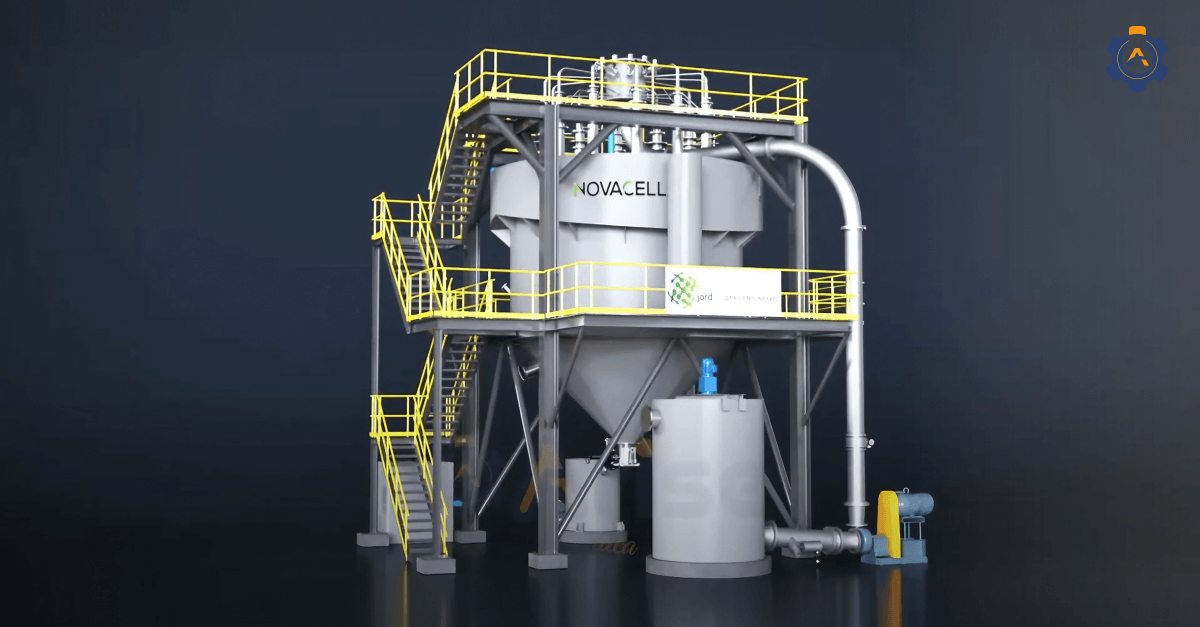
Case Study: MVR Evaporator System Animation for a Process Industry OEM
Client: Mazda Limited, a manufacturer of industrial process equipment including evaporators, vacuum systems, and heat transfer equipment serving the chemicals, fertilizers, pharmaceuticals, food and beverage, and petroleum refinery industries.
Challenge: Mazda’s MVR (Mechanical Vapour Recompression) based evaporator system is a technically complex piece of process equipment. The system works on a heat pump principle: vapour generated during evaporation is captured, compressed by a mechanical compressor to raise its temperature and pressure, and then reintroduced as a heating medium, eliminating the need for fresh steam and reducing energy consumption by up to 80 to 90% compared to conventional evaporator designs.
Explaining this process to plant operators, maintenance teams, and buyers across industries such as chemicals, pesticides, fertilizers, and food processing. Explaining it in a way that builds genuine operational understanding is not achievable through schematic drawings or product brochures. The internal vapour compression cycle, the heat exchange sequence, the compressor operation, and the safety interlocks that govern the system all happen inside closed vessels and pipework that no photograph or diagram can communicate clearly.
What Arise 3D produced: A 3D process animation showing the complete working cycle of the MVR evaporator system. The animation renders the internal process visually. It shows the feed solution entering the evaporator, the vapour rising and separating, the mechanical compressor increasing vapour pressure and temperature, the compressed vapour condensing in the heat exchanger and releasing latent heat back into the process, and the continuous cycle that makes the system energy self-sufficient during steady-state operation.
The MVR system’s entire value proposition sits inside closed vessels and pipework that no photograph or product brochure can communicate. The 3D animation makes that internal process visible, which is what operators, distributors, and international buyers across chemicals, fertilizers, pharmaceuticals, and food processing actually need to understand the equipment before they work with it or purchase it.
Make complex internal processes easier to understand for operators, maintenance teams, and buyers.
Get In Touch
How 3D Safety Animation Supports Regulatory Compliance Globally
Process safety training obligations vary by jurisdiction, but every major framework shares a core requirement: organisations must demonstrate that workers received competent, documented, verifiable training on the hazards relevant to their work.
USA: OSHA PSM (29 CFR 1910.119) This standard requires initial training and documented refresher training for all employees involved in covered processes. Workers must demonstrate understanding of the procedures. 3D animated modules, paired with LMS-tracked assessments, give organisations the documentation trail that OSHA inspectors look for.
USA: OSHA LOTO (29 CFR 1910.147) Each worker authorised to perform LOTO must receive training specific to the energy control procedures for the equipment they will service. Equipment-specific 3D LOTO animations match this requirement exactly.
UK: COMAH Regulations 2015 Major hazard facilities must show that their safety management system ensures personnel are competent for the tasks they perform. The HSE expects documented evidence of training effectiveness, not just records of training delivery. Animated modules with completion tracking and embedded assessments support that evidence.
EU: Seveso III Directive (2012/18/EU) Article 8 requires operators of upper-tier establishments to maintain safety management systems with training provisions that ensure workers understand major accident hazards at the site. 3D animated content scales across multi-site, multi-language European operations without requiring a separate trainer in each location.
Australia: Major Hazard Facilities Regulations State-based MHF regulations require documented safety cases that include evidence of worker competency. The Work Health and Safety Act 2011 requires training that employers deliver effectively and can demonstrate they delivered effectively. A tracked animated training programme satisfies both.
UAE and GCC: OSHAD-SF and Gulf Standards The Abu Dhabi OSH System Framework and equivalent GCC regulations require structured safety management systems and documented training programmes for high-hazard operations. 3D animation also addresses the multilingual workforce reality that makes consistent training delivery particularly challenging across GCC facilities.
International: ISO 45001:2018 Clause 7.2 requires workers to be competent on the basis of education, training, or experience. Clause 7.3 requires awareness of hazards and the consequences of non-conformance. Well-produced animated training, tracked through an LMS, produces auditable evidence for both clauses.
Across every one of these frameworks, the standard is the same: documented, consistent, verifiable training. A 3D animated module linked to LMS completion and assessment tracking gives you a compliance record that holds up under any of these audits.
Starting a 3D Safety Animation Project
You do not need a finished 3D model to get started. Plant drawings, P&IDs, and your existing SOPs are enough. A typical procedure module takes four to eight weeks from brief to delivery and can be produced in multiple languages from the same base animation. Once built, it serves as a training asset for years.
The procedure on paper and the procedure in practice are two different things. We build 3D safety animation from your SOPs, P&IDs, and plant drawings. No finished 3D model required. Multiple languages. LMS-ready delivery.
Request a Project Estimate